Houseplant Care Guide for Beginners (Updated 2026)
Simple houseplant care answers for beginners: how often to water, how much light to give, when to repot, and how to fix common problems. Updated 2026.
houseplant care: Simple houseplant care answers for beginners: how often to water, how much light to give, when to repot, and how to fix common problems. Updated 2026.
Houseplant care is the practice of giving indoor plants the right combination of light, water, soil, temperature, humidity, and nutrients so they can grow indoors. Most houseplants fail from overwatering, not neglect, so the fastest way to improve is simple: water less and observe more. This guide gives direct, beginner-friendly answers to the most common houseplant care questions.
Updated 2026.
Houseplant Care at a Glance
These key numbers explain why indoor plants are worth caring for.
| Stat | What it means | Source |
|---|---|---|
| Houseplants removed up to 87 percent of common indoor air pollutants in 24 hours in sealed chambers | Plants help clean indoor air | NASA Clean Air Study, 1989 |
| Indoor air can have 2 to 5 times higher pollutant levels than outdoor air | Ventilation and greenery matter indoors | U.S. EPA |
| Short interactions with plants lowered stress in a randomized crossover study | Caring for plants is good for you | Journal of Physiological Anthropology, 2019 |
Houseplant Care Basics: The Five Non-Negotiables
Master these five basics and most houseplants will thrive.
- Light. Match the plant to the window. A south window can burn leaves, while a north window may be too dark for flowering plants.
- Water. Water only when the soil feels dry at 1 inch deep. Most beginners overwater, not underwater.
- Potting mix and drainage. Always use a pot with drainage holes and a loose, well-draining mix.
- Temperature and humidity. Keep plants away from radiators, air conditioners, and cold drafts. Most prefer 18 to 24 degrees Celsius (65 to 75 degrees Fahrenheit).
- Fertilizer and repotting. Feed in spring and summer, then repot when roots fill the pot.
How Often Should You Water Houseplants?
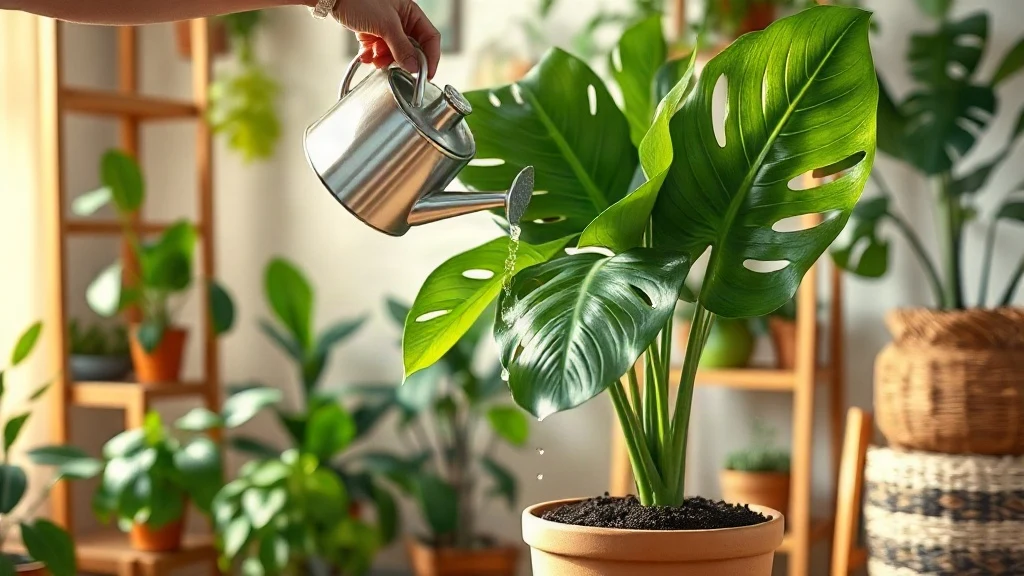
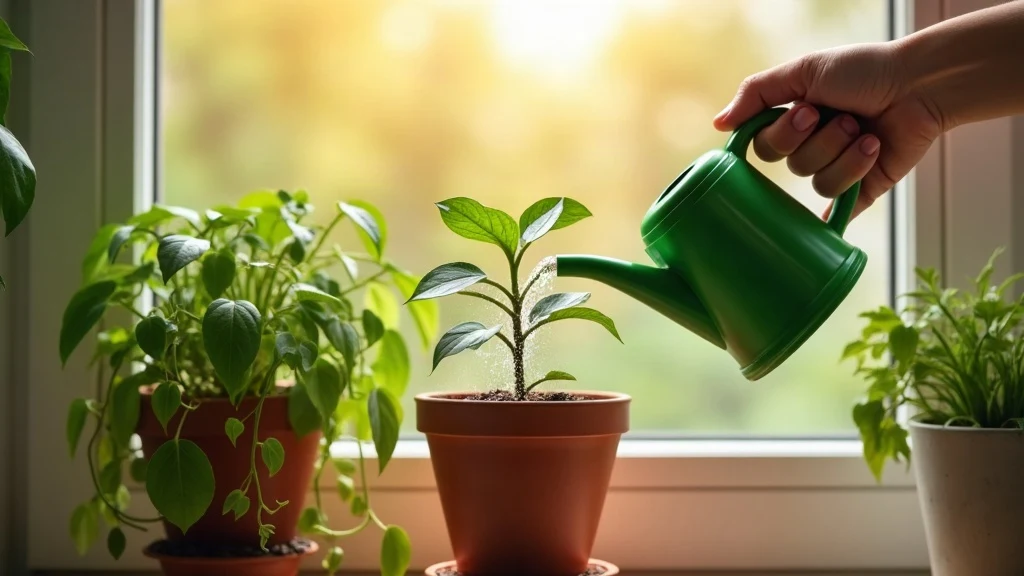
Water a houseplant only when the top 1 inch of soil feels dry, which is usually every 7 to 10 days for common indoor plants. Stop watering on a calendar. Touch the soil first, and if soil sticks to your finger, wait a day or two. When you water, pour slowly until water runs from the drainage holes, then empty the saucer.
Overwatering is the number one cause of houseplant death. These signs mean you are watering too often:
- Yellow lower leaves that feel soft
- Mushy stems at the base
- Soil that stays wet for more than two weeks
- A sour or musty smell from the pot
Underwatered plants look different. The leaves go dry, crispy, or curled, and the soil pulls away from the pot edges. A complete soak in a sink or tub for 15 minutes is the fastest way to recover a very dry plant.
How Much Light Do Houseplants Need?
Most houseplants need bright, indirect light for 6 to 8 hours a day, not direct sun. Bright indirect light means a spot near a bright window where the sun is softened by a sheer curtain or where direct sun never touches the leaves. Direct sun scorches most foliage plants, while too little light causes leggy stems, pale leaves, and slow growth.
- Low light: pothos, snake plant, ZZ plant, philodendron
- Medium light: monstera, spider plant, peace lily, calathea
- Bright light: succulents, cacti, croton, lemon tree
Turn the pot a quarter turn every time you water so the plant grows evenly. If you are not sure, start with a low light tolerant plant and move it closer to a window if it stretches.
Which Houseplants Are Easiest for Beginners?
The easiest houseplants tolerate low light, irregular watering, and average home humidity. This comparison table will help you pick.
| Plant | Light | Water | Why it is easy |
|---|---|---|---|
| Pothos | Low to bright indirect | Every 7 to 10 days | Survives missed waterings and grows fast |
| Snake plant | Low to bright indirect | Every 2 to 3 weeks | Tolerates almost any room |
| Spider plant | Bright indirect | Every 7 to 10 days | Easy to propagate and very forgiving |
| Peace lily | Medium to bright indirect | Every 7 days | Droops to tell you when it needs water |
| ZZ plant | Low to bright indirect | Every 2 to 3 weeks | Handles neglect better than most plants |
If you already have popular species, the monstera plant care guide and the Monstera adansonii care guide explain the differences. For a broader foundation, read the complete indoor plant care guide.
What Soil and Pot Should You Use?
Use a well-draining potting mix, never garden soil, and always choose a pot with drainage holes. Garden soil compacts in containers, holds too much water, and can bring in pests. A loose mix with perlite or pumice gives roots oxygen and prevents root rot.
- All-purpose potting mix: most foliage plants
- Cactus and succulent mix: succulents, jade, aloe, snake plant
- Orchid bark mix: orchids and epiphytes
- Add perlite or pumice to any mix to improve drainage
When you repot, choose a pot only 1 to 2 inches wider than the current one. A huge pot holds too much wet soil and can drown the roots. Terracotta is ideal for plants that like to dry out; plastic pots are better for moisture lovers.
How Do You Raise Humidity for Houseplants?
Most houseplants want 40 to 60 percent humidity, which is higher than many heated homes in winter. Low humidity shows up as brown leaf tips, crispy edges, and curling leaves. Raise humidity with these cheap methods:
- Group plants together so they create a humid microclimate
- Set pots on a tray filled with pebbles and water
- Run a small humidifier in the room
- Keep plants away from radiators and air vents
Misting is less effective than a humidifier, but it can help during a dry spell. The Royal Horticultural Society houseplant guide also recommends consistent warmth and good air flow for indoor plants.
When Should You Fertilize and Repot Houseplants?
Fertilize houseplants every 4 to 6 weeks from spring through early fall, and stop completely in winter. Most balanced liquid fertilizers mixed at half strength are enough. Too much fertilizer creates brown leaf tips and a white salt crust on the soil, so dilute to avoid fertilizer burn.
Repot every 12 to 18 months, ideally in spring. Clear signs that you need to repot include roots circling the bottom, roots growing through drainage holes, water running straight through the pot, and soil drying out within a day.
- Water the plant one day before repotting.
- Gently loosen the root ball and shake off old soil.
- Trim any dark, mushy roots with clean scissors.
- Place the plant in a pot 1 to 2 inches wider.
- Fill around the roots with fresh mix and water lightly.
Why Do Houseplants Keep Dying?
Most houseplants die from overwatering, low light, or a sudden change in environment. When you know the cause, most plants can be saved. Check the roots first: white and firm roots mean the plant still has a chance; dark and mushy roots mean root rot has set in.
| Symptom | Most likely cause | Fix |
|---|---|---|
| Yellow leaves | Overwatering | Let the soil dry out and check drainage |
| Brown crispy tips | Low humidity or salt build-up | Raise humidity and flush the soil |
| Leggy stems | Too little light | Move closer to a bright window |
| Drooping leaves | Underwatering or root rot | Feel the soil and inspect the roots |
| Pale leaves | Nutrient shortage | Fertilize lightly in spring and summer |
A garden is a grand teacher. It teaches patience and careful watchfulness; it teaches industry and thrift; above all it teaches entire trust.
Liberty Hyde Bailey, American horticulturist
Houseplant care rewards the same patience. Watch how each plant responds, adjust one thing at a time, and most plants will recover within a few weeks. You will find more species-specific help in the Houseplant Care category.
Houseplant Care FAQ
How often should I water houseplants?
Water most houseplants only when the top 1 inch of soil feels dry, usually every 7 to 10 days. Many plants need less water in winter because growth slows.
What is the easiest houseplant to keep alive?
Pothos, snake plant, and ZZ plant are the easiest houseplants because they tolerate low light and irregular watering.
How much light do houseplants need?
Most houseplants need bright, indirect light for 6 to 8 hours a day. Direct sun burns many common foliage plants.
Why are my houseplant leaves turning yellow?
Yellow leaves usually mean overwatering, but they can also mean low light, a nutrient shortage, or a temperature shock. Check soil moisture first.
When should I repot my houseplant?
Repot every 12 to 18 months or when roots circle the bottom of the pot. Choose a pot only 1 to 2 inches wider than the current one.
Next story
Monstera Plant Care: Simple Guide for Your Swiss Cheese Plant
Monstera plant care made simple: light, water, soil, humidity, propagation, yellow leaves, and pests. Updated for 2026.